How to Choose a Domain Registrar: 9 Things That Matter (2026 Guide)
How to choose a domain registrar without overpaying. Compare renewal prices, privacy, security and transfers, and see which registrar is cheapest for each extension.
 PitchName Team7 min read
Choosing a domain registrar looks simple: search a name, pick the lowest price, pay. But the first-year price is the least important number on the page. What you pay for renewals, how easy it is to move your domain later, and how well your account is protected matter far more over the years you will own the name.
This guide explains how to choose a domain registrar step by step, the nine things worth comparing, and the traps that cost domain owners and investors real money. If you just want the numbers, our free domain price comparison shows registration, renewal and transfer prices at several registrars for 1,600+ extensions, ranked by what you really pay over three years.
What a domain registrar actually does
A registrar is the company that registers a domain name in your name with the registry that runs the extension. Verisign runs .com, for example, but you cannot buy from Verisign directly: you buy through an accredited registrar such as Porkbun, Dynadot, NameSilo, Namecheap or GoDaddy.
The registrar then:
- keeps the domain registered in your name, and renews it when you pay,
- lets you point the domain to a website or email (DNS),
- hides your personal details from the public WHOIS record (privacy),
- lets you transfer the domain to another registrar or to a buyer.
Because every accredited registrar sells the same .com from the same registry, the domain itself is identical everywhere. What changes is the price, the service, and how much freedom you keep.
1. Compare renewal prices, not first-year prices
This is the single most expensive mistake. Many registrars sell the first year of a domain at a loss and make the money back on renewals. A .xyz at $1.99 the first year can renew at $14 or more. Some extensions renew at two or three times the first-year price.
A domain is something you pay for every year, so compare the renewal price and, better, the total cost over three years: the first year plus two renewals.
Here is a real example from our comparison at the time of writing (October 2026, US dollars, before tax):
| Extension | Registrar | First year | Renewal | 3-year total |
|---|---|---|---|---|
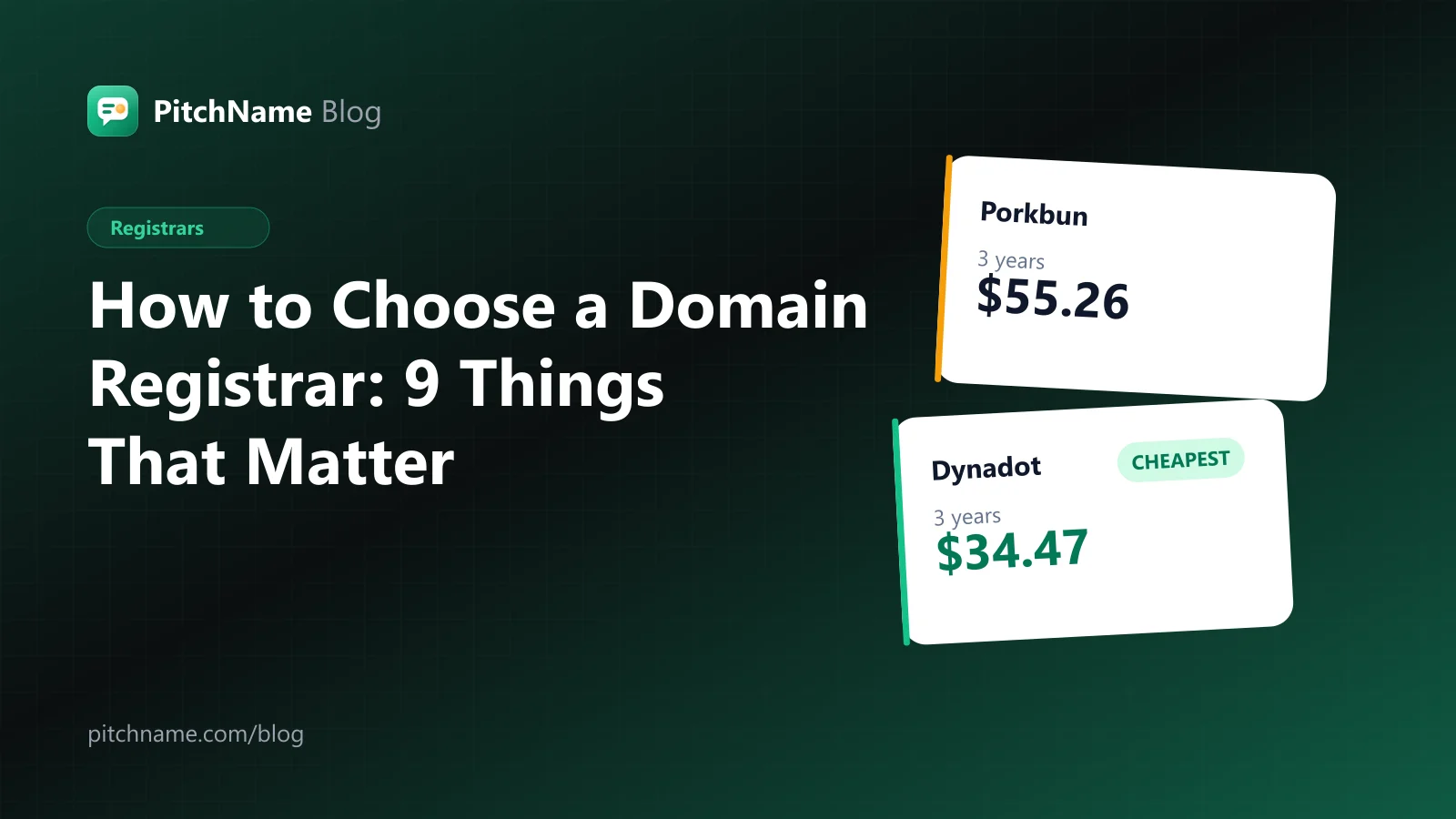
| .si | Dynadot | $11.49 | $11.49 | $34.47 |
| .si | Porkbun | $20.34 | $17.46 | $55.26 |
| .si | NameSilo | $12.99 | $24.89 | $62.77 |
NameSilo has the second-lowest first-year price for .si, but over three years it is the most expensive of the three because of its higher renewal. On a portfolio of 50 or 100 domains, differences like this add up to hundreds of dollars a year.
Prices change often, so check the current numbers in the domain price comparison before you register.
2. Free WHOIS privacy should be included
When you register a domain, your name, address, email and phone number go into a public record unless your registrar hides them. Without privacy you will receive spam, scam "renewal notices" and sales calls within days.
Most good registrars now include privacy for free and for life. Some still charge $10 or more per year for it, which can double the real cost of a cheap domain. Before you buy, check that privacy is free, automatic and included on renewal, not just in the first year.
3. Security: two-factor login and a registrar lock
Your registrar account controls your domains. If someone gets into it, they can move your domains away, and getting a stolen domain back is slow and not guaranteed. Look for:
- Two-factor authentication (2FA) with an authenticator app, not only SMS.
- A registrar lock (transfer lock) that is on by default, so nobody can start a transfer without your action.
- Login alerts and a clear record of account activity.
If you hold valuable domains, turn on 2FA the day you open the account and use a unique password.
4. Easy, fair transfers out
At some point you may want to move a domain to a cheaper registrar, or deliver it to a buyer. A good registrar makes that simple: you unlock the domain, copy the authorization (EPP) code from your dashboard, and the transfer goes through within a few days.
Watch for registrars that hide the transfer code behind support tickets, add "transfer out" fees, or make the process confusing on purpose. We explain the full process in our guide on how to transfer a domain to a cheaper registrar.
5. DNS that just works
Most people point their domain at a website builder or hosting company and never think about DNS again. Still, check that the registrar gives you:
- free DNS hosting with easy editing of A, CNAME, MX and TXT records,
- free URL forwarding (handy for domains you are holding for sale),
- email forwarding, if you want a simple
you@yourdomain.comwithout paying for a mailbox.
These are free at most good registrars. You should not pay extra for basic DNS.
6. The extensions you need
Not every registrar sells every extension. Country extensions such as .si, .de or .co.uk, and newer ones like .ai, are only available at some. If you want a specific extension, check which registrars carry it, and at what price, before you open accounts. Our domain search checks a name across dozens of extensions at once and shows the price for each.
7. No upsell maze at checkout
Some registrars fill the checkout with extra hosting, "SSL bundles", website builders and add-ons that are already free elsewhere, and some pre-tick them. It is not illegal, but it wastes time and money.
A clean checkout that shows the real total, with privacy included, is a good sign about how the registrar will treat you later, too.
8. Support you can reach
When something goes wrong, such as a domain stuck in transfer or a payment failure close to expiry, you want a human who answers. Check whether the registrar offers live chat or ticket support, how fast it replies, and whether support is available in your time zone.
9. Tools for domain investors
If you buy domains to resell, a few extra features matter:
- Bulk tools: register, renew and edit DNS for many domains at once.
- Marketplace connections: easy listing on Afternic, Sedo or the registrar's own marketplace, and fast delivery when a name sells.
- An API: to check availability and prices automatically.
- Expiring and auction domains: some registrars run their own expired-domain auctions, a good source of aged names.
PitchName covers the investor side for you: it finds the businesses most likely to buy each of your domains and helps you pitch them. See how to sell a domain to an end user for the full process.
Common registrar traps to avoid
- The $0.99 first year that renews at $20 or more. Always look at the renewal.
- Paid privacy sold as an "add-on".
- Auto-renew on an old card that fails silently, so the domain expires. Keep your payment details current and turn on renewal reminders.
- Long registration terms you did not mean to buy: some checkouts default to two or more years.
- Hidden restore fees: if a domain expires, getting it back after the grace period can cost $80 to $200. Renew on time.
Should you keep all your domains at one registrar?
For most people, yes: one account is easier to secure and manage. Domain investors with large portfolios often use two or three registrars instead, to get the best renewal price for each extension and to avoid depending on a single company. A simple rule: keep each extension where it renews cheapest, and keep your most valuable names where security and support are strongest.
How to choose a domain registrar in 5 minutes
- Write down the extension (or extensions) you need.
- Open the domain price comparison and look at the 3-year total, not the first year.
- Shortlist the two cheapest registrars and confirm both include free privacy and 2FA.
- Check that transfers out are simple and free.
- Register, turn on 2FA, and set auto-renew with a card that will not expire before the renewal date.
Frequently asked questions
Does the registrar affect my domain's SEO?
No. Google does not rank a site differently because of where its domain is registered. What matters is your website, its content and its links.
Is the cheapest registrar always the best?
The cheapest over three years usually is, as long as it includes free privacy, 2FA and easy transfers. The cheapest first year often is not.
Can I change registrars later?
Yes. You can transfer most domains after 60 days, and the transfer usually adds a year to the registration, so you rarely lose money moving. See our domain transfer guide.
Which registrar do domain investors use?
Many use low-cost registrars with good bulk tools and free privacy, such as Porkbun, Dynadot and NameSilo, and pick per extension based on renewal price. Compare them side by side in the price comparison.
Choosing a registrar takes five minutes once you know what to look at. Focus on renewals, privacy and security, and the domain you register today will keep costing you what you expect, every year you own it.
Some links in this article are affiliate links: PitchName may earn a commission if you buy through them, at no extra cost to you.